
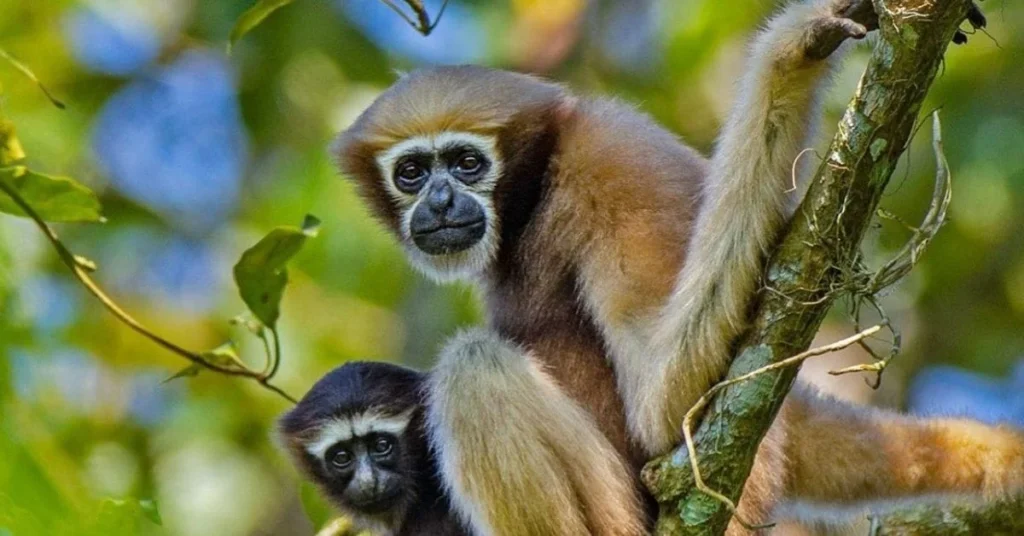
A new study reveals a critical decline in the habitat of the Hoolock gibbon, India’s only ape, across southern Assam’s Barak Valley and Dima Hasao regions. Researchers using advanced satellite modeling and field surveys found that as little as 16% to 31% of the landscape remains suitable for these primates, who depend entirely on dense, contiguous forest canopies. While historical estimates once placed the population in the thousands, current sightings recorded only about 250 individuals in 88 groups. This drastic reduction highlights that fragmented and degraded forests are no longer capable of sustaining the species, leaving them isolated in ever-shrinking pockets of greenery.
The primary drivers of this ecological crisis are intensifying human activities, including the expansion of agriculture, infrastructure development, and monoculture plantations like rubber and tea. These anthropogenic pressures create “fading calls” as the gibbons lose the uninterrupted forest cover essential for their survival. Because Hoolock gibbons serve as vital indicators of overall forest health, their disappearance signals a broader collapse of the Indo-Burma biodiversity hotspot. Conservationists emphasize that urgent intervention—prioritizing the protection of remaining forest corridors and reducing human disturbance—is the only way to ensure the survival of these iconic apes and the ecosystems they represent.
More Stories
Houses of Rongmei Naga Residents Burnt Along Jiribam-Tamenglong Border
From Training 1,000+ Forest Staff to 11 Convictions: Inside Manas’s Decade-Long Fight Against Wildlife Crime
Assam Cabinet Approves Study Visit to Tackle Rising Monkey Problem