
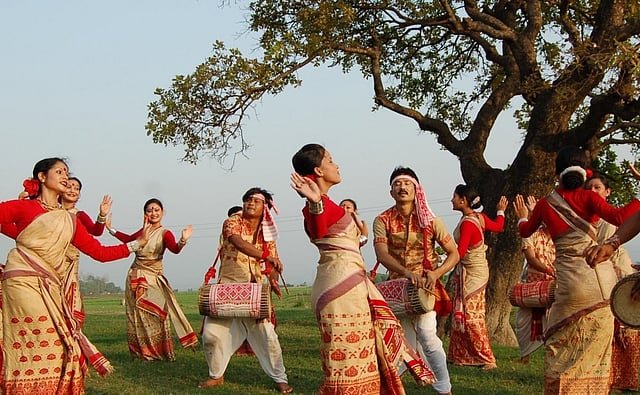
Across the Brahmaputra valley, the spirit of Rongali Bihu has taken center stage as Assam celebrates its most cherished festival with unwavering fervor. Despite the rapid urbanization of its cities, the “indomitable zeal” of the people has ensured that the traditional essence of the Spring festival remains intact. From the rhythmic beats of the dhol and the soulful strains of the pepa to the community feasts organized in both rural hamlets and urban high-rises, the celebrations underscore a deep-rooted commitment to preserving Assamese cultural identity for the next generation.
The report highlights how local Husori groups continue to move from house to house, offering blessings through traditional songs and dances—a practice that remains the heartbeat of the festivities. While modern influences have introduced large-scale Bihu functions on stage, the core rituals, such as the Goru Bihu (dedicated to cattle) and the exchange of the symbolic Gamosa, continue to be performed with ancestral precision. As families gather to share larus and pithas, the celebration serves as a powerful reminder of the state’s resilience and its ability to keep its heritage vibrant and untouched by the passage of time.
More Stories
Assam Farmer Picked Up from Border ‘Zero Point’, Released by BGB at Night
Assam Finance Minister Prioritizes Tax Base Expansion and Technology-Driven Revenue Mobilization Ahead of State Budget
Assam Prepares to Welcome Powerful Global Leader as PM Modi Details Three-Day July Visit