
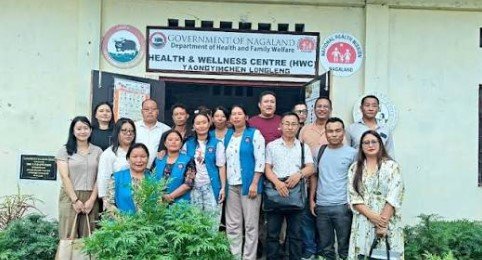
The Nagaland State National Vector Borne Disease Control Programme (NVBDCP), operating under the Directorate of Health & Family Welfare (DHFW), organized a comprehensive refresher training programme for medical officers at the DHFW Conference Hall in Kohima on October 27. Designed to reinforce healthcare capabilities across the state, the training session focused primarily on critical vector-borne diseases (VBDs), including malaria, dengue, kala-azar, Japanese Encephalitis (JE), and chikungunya. The initiative was specifically structured to strengthen both the clinical and technical capacities of medical personnel, equipping them with advanced knowledge and practical protocols to improve disease diagnosis, case management, active surveillance, reporting accuracy, laboratory confirmation processes, and integrated prevention and control strategies. By upgrading the skills of front-line medical officers, the state health department aims to ensure earlier detection, prompt treatment, and more efficient public health responses to vector-borne outbreaks across all districts of Nagaland, thereby reducing morbidity and mortality associated with these endemic health challenges. Overall, the refresher training underscores the ongoing commitment of the Directorate of Health & Family Welfare to uphold high standards of healthcare delivery, foster continuous professional development among clinical staff, enhance field surveillance mechanisms, and implement robust integrated vector management measures to safeguard public health and community well-being throughout the region.
More Stories
New ICAR Rice Cultivars Promise Up to 45% Yield Boost for Nagaland Farmers
From Tawang’s Monasteries to Dawki’s Crystal Waters: Your Ultimate October Itinerary
IndiGo Enhances Travel Between Guwahati and Itanagar with Five-Day Weekly Schedule