
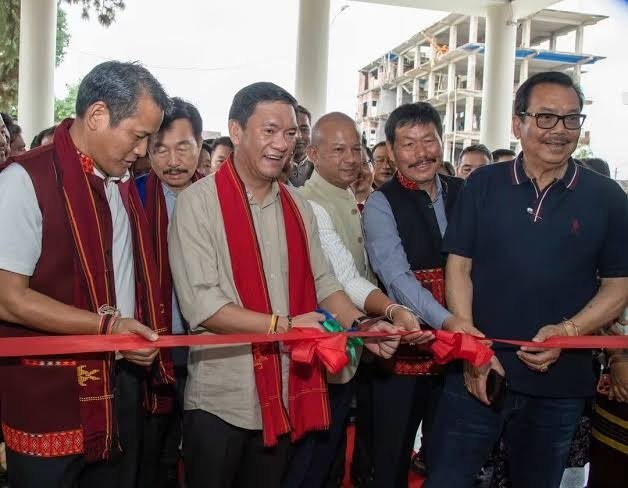
Arunachal Pradesh Chief Minister Pema Khandu recently dedicated a suite of major infrastructure projects developed under the Pasighat Smart City Mission, emphasizing that the remarkable transformation of the state’s oldest town mirrors broader developmental strides achieved across the region. Highlighting that forty-two out of the forty-three sanctioned projects have now been successfully completed—with the remaining sewage treatment plant nearing finalization—Khandu inaugurated landmark facilities including the Siang Riverfront Development, an upgraded market area, a smart guest house, a district e-library, recreation centers, smart roads, solid waste management systems, an integrated command and control center, and entry gate infrastructure at Mebo. Several key assets such as the riverfront, guest house, and recreation center are already operating on revenue-generating models, while twenty-two completed initiatives have been formally transferred to the Pasighat Municipal Council and relevant departments for continuous maintenance. Recalling that Pasighat earned its Smart City status in June 2017 following concerted state efforts under the national framework launched by Prime Minister Narendra Modi in 2015, Khandu noted with pride that Arunachal Pradesh stands unique as the sole northeastern state boasting two designated Smart Cities, alongside Itanagar. Emphasizing that modern public infrastructure must directly translate into an enhanced quality of life and expanded opportunities, the Chief Minister passionately urged citizens to take active ownership and responsibility for preserving public assets, drawing inspiration from community-driven upkeep models seen in places like Tawang. Linking Pasighat’s modernization to the larger national vision of a Viksit Bharat by 2047, Khandu asserted that India’s holistic development is intrinsically tied to Arunachal’s progress, calling upon legislators, administrators, and local stakeholders to formulate robust grassroots plans focused on sustainable youth livelihoods, agricultural entrepreneurship, and tourism promotion. Furthermore, he encouraged officials to leverage strategic convergence among central and state schemes—noting that the Smart City initiative successfully integrated substantial funding from the central government, state allocations, and convergence models—to multiply public expenditure impact, harness regional resources creatively, and accelerate comprehensive socio-economic growth throughout the state.
More Stories
New ICAR Rice Cultivars Promise Up to 45% Yield Boost for Nagaland Farmers
From Tawang’s Monasteries to Dawki’s Crystal Waters: Your Ultimate October Itinerary
IndiGo Enhances Travel Between Guwahati and Itanagar with Five-Day Weekly Schedule