
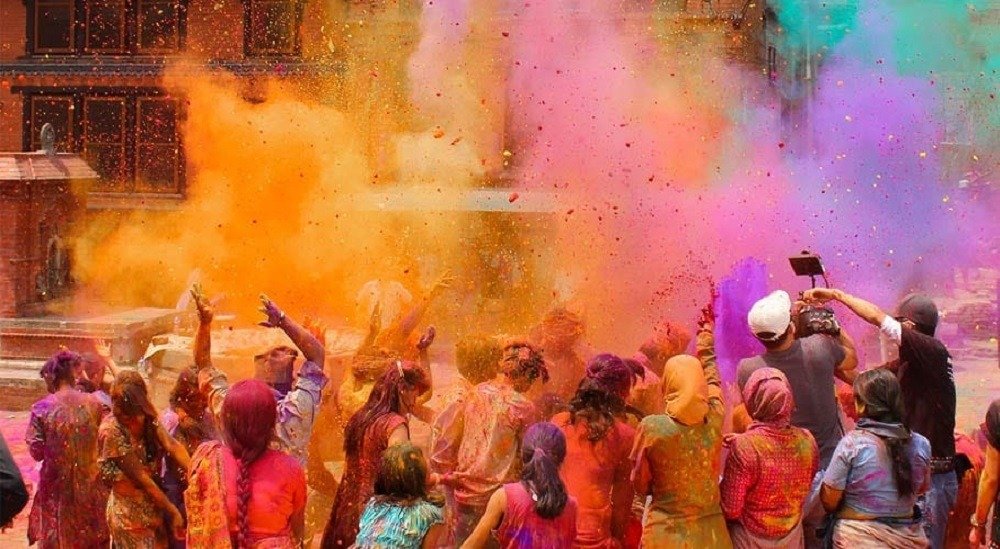
Holi is being celebrated with great enthusiasm across the Tarai districts today, a day after the festival was observed in the mountainous and hilly regions of Nepal. Streets, marketplaces, and neighborhoods are filled with vibrant colors as people gather to mark the joyous occasion.
The festival is being observed in districts including Nawalparasi (Bardaghat Susta Purba), Nawalparasi (Bardaghat Susta Paschim), Jhapa, Morang, Sunsari, Saptari, Siraha, Udayapur, Dhanusha, Mahottari, Sarlahi, Rautahat, Bara, Parsa, Rupandehi, Kapilbastu, Dang, Banke, Bardiya, Kailali, and Kanchanpur, among others. The government has declared a public holiday in the Tarai region to allow people to celebrate the festival with family and friends.
Celebrated annually on the full moon day of the lunar month of Fagun, Holi symbolizes the arrival of spring and the triumph of truth over falsehood. The festival is rooted in Hindu mythology and carries a message of hope, renewal, and unity.
From early morning, people of all ages have been seen smearing each other with colored powders and splashing colored water in a spirit of joy and camaraderie. Music, dancing, and festive gatherings have added to the celebratory atmosphere, with communities coming together to strengthen social bonds.
While Holi is celebrated a day earlier in the hills and mountainous regions, the Tarai-Madhes region traditionally observes the festival the following day. Despite regional variations in timing and customs, the essence of the festival remains the same—promoting harmony, goodwill, and cultural unity.
Observed under different names and traditions across Nepal’s diverse geographical regions, Holi continues to stand as a vibrant expression of the country’s rich cultural heritage and social cohesion.
More Stories
MP CM Mohan Yadav Rides E-Scooter Through Slum Lanes to Congratulate Class 12 Topper Chandni Vishwakarma
Nepal, India Sign MoU to Boost Cross-Border Biodiversity Conservation
Election Commission Warns Against Code Violations Ahead of HoR Polls; Teachers, Officials Urged to Remain Neutral